Posts Tagged ‘Education’

Random Acts of Kindness Week Feb. 13th – 20th Opens Doors to Kindness

Wednesday, February 15th, 2012

Today’s post comes from Marilyn Decalo, the Education Director for The Random Acts of Kindness Foundation.

Happy Random Acts of Kindness Week! The Random Acts of Kindness Foundation is sharing ideas and stories from hundreds of people celebrating kindness and performing kind acts across the country this week, and we couldn’t be more thrilled! Friends, teachers, parents, children, co-workers and communities have taken kindness to heart by doing kind acts and inspiring us with their stories on the Random Acts of Kindness Facebook page  and website.

One of the most inspiring stories we found is told in our Extreme Kindness Challenge winner’s video “Peach’s Neet Feet” produced by The Random Acts of Kindness Foundation and Storytellers for Good,.  Madison Steiner paints art in the form of footwear and donates them to children with long-term illness and cancer.  What an awesome act of kindness!

While Random Acts of Kindness Week is designed to celebrate the value of being kind to one another, we really don’t need a special day or week to do kind acts. Focusing a little more on the positive and treating others with kindness can happen everyday in simple ways like saying thank you or smiling at someone. Our kind acts can be as small as holding the door open for someone or as big as volunteering at the local food bank.  We don’t need to wait for a natural disaster to show kindness, and everyone from pre-school students to seniors can be kind.

Here’s how you can start practicing kindness.  As you look around in your community this week, whether that’s your school, workplace or city, notice where someone can use a little more kindness in their life.  Choose to make a difference by offering a little something of appreciation.  A note of thanks, helping with a chore, or just holding a door open for someone can make them feel appreciated and brighten your day. Commit to doing it again the next day. Pretty soon you’ll be doing kind-hearted acts everyday.

The Random Acts of Kindness Foundation invites you to join the kindness movement and use our free resources to for teaching, sharing and doing kindness.  We’ve got ideas, quotes, lesson plans, activities and videos to inspire and empower everyone to be kind

Kindness can change our world; one joyful, selfless act at a time!


Kindly,

Marilyn Decalo, Education Director

The Random Acts of Kindness Foundation

Check out Peach’s Neet Feet the winner of the Extreme Kindness Challenge. This video was originally posted on The Random Acts of Kindness Youtube channel. 

Enhanced by Zemanta
Share

Mentoring in America

Friday, January 27th, 2012

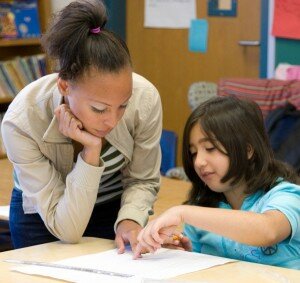
January is the start of so many good things:  a new year, a renewed surge of volunteers, and National Mentoring Month. It is important to celebrate our mentors: those who change our lives by being a good listener, setting boundaries, providing support and criticism, and celebrating milestones with us.Hands As we wrap up the month, lets look back at this year’s presidential proclamation for inspiration on ways to carry the spirit of National Mentoring Month throughout the year!

Presidential Proclamation–Mentoring Month

    Across our Nation, mentors steer our youth through challenging times and support their journey into adulthood.  During National Mentoring Month, we honor these important individuals who unlock the potential and nurture the talent of our country, and we encourage more Americans to reach out and mentor young people in their community.

    The dedication of mentors has helped countless young men and women succeed when they might have otherwise fallen short of their full potential.  Mentors can provide a steady presence and share their valuable knowledge and experiences.  Even brief amounts of quality time set aside by these compassionate adults can have a lasting impact on the development of a child.  Mentors can also support the lessons of parents and teachers by encouraging students to complete their schoolwork and by instilling enduring values of commitment and persistence.  From coaches to community leaders, tutors to trusted friends, mentors are working with today’s youth to develop tomorrow’s leaders.mentor

    We know the difference that a responsible, caring adult can make in a child’s life.  Effective mentoring programs can result in better school attendance, positive student attitudes, and a reduced likelihood of initiating drug and alcohol use.  Across the Federal Government, we have provided resources to expand mentoring opportunities for America’s young people.  We are increasing mentoring efforts in Native American and rural communities and are working to ensure our investments are coordinated, effective, and focused on those most in need.  To help build healthy families and communities and provide our youth with strong role models, I launched the President’s Fatherhood and Mentoring Initiative.  First Lady Michelle Obama and I have also established mentoring programs within the White House, pairing staff with young men and women in the Washington, D.C., area.  For information and resources about mentoring opportunities, I encourage all Americans to visit:  www.Serve.gov/Mentor.

    Many Americans have realized their promise because a mentor encouraged them to reach for new heights and guided them along the path to achievement.  The contributions of these engaged adults extend beyond the lives they touch and have a lasting impact that strengthens our country and our future.

    NOW, THEREFORE, I, BARACK OBAMA, President of the United States of America, by virtue of the authority vested in me by the Constitution and the laws of the United States, do hereby proclaim January 2011 as National Mentoring Month.  I call upon all public officials, business and community leaders, educators, and Americans across the country to observe this month with appropriate ceremonies, activities, and programs.

 The president   IN WITNESS WHEREOF, I have hereunto set my hand this twenty-first day of December, in the year of our Lord two thousand ten, and of the Independence of the United States of America the two hundred and thirty-fifth.
BARACK OBAMA

Yesterday was National Mentoring Day. What did you do to thank your mentor? How will you celebrate the support system mentoring provides throughout the year?

Related Articles

How to Be a  Mentor

Ten Ways to Celebrate National Mentoring Month

National Thank Your Mentor Day

Share

8 Benefits of Volunteerism

Thursday, January 19th, 2012

New Year’s Resolutions are often made with the best of intentions and promptly dropped. Statistics show that about two weeks into the year one-third of those who make resolutions are close to quitting. By March, 85 percent will have thrown in the towel!

What better way to keep that resolution to volunteer than to reassess exactly how volunteering will benefit you? You may be surprised at some of the various benefits of volunteerism! Tour members volunteer with clean-up efforts

  •  Meet new people Volunteering brings together a diverse range of people from all backgrounds and walks of life. It puts you in contact with folks with similar interests that you may not have encountered otherwise! Volunteer projects are a great way to make new friends or simply meet people with different life experiences than your own. You can not only develop lifelong personal and professional relationships, you can also hear about job openings, gather insider employment information and develop great references.
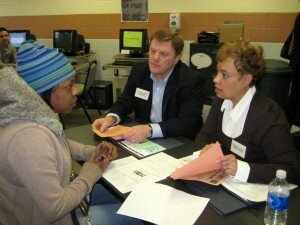
  • Network and gain connections In these uncertain economic times, the opportunity to network is nothing to scoff at. Volunteer projects offer that chance, and often in an arena related to your current skills. Networking is an exciting benefit of volunteering and you can never tell who you will meet or what new information you will learn and what impact this could have on your life.Earned Income Tax Credit Volunteer
  • Looks good on your resume & college application Volunteering demonstrates workplace, management, and leadership skills that can be documented in a resume. Work experience is work experience, with or without a paycheck. If you are developing new skills or thinking of pursuing a new career, volunteer work can give you valuable, practical experience. Career counselors and headhunters encourage job seekers to document pertinent volunteer experiences. Volunteer work support skills, character and balance in life. 90% of executives in a national survey of Fortune 500 companies believed volunteering built teamwork and provided valuable professional development opportunities.
  • Learn new skills Volunteering is the perfect vehicle to discover something you are really good at and develop a new skill. It is never too late to learn new skills and there is no reason why you should stop adding to your knowledge just because you are in employment or have finished education. Planning and implementing a major fundraising event can develop goal setting, planning and budgeting skills. Supervising and training other volunteers helps to develop supervisory and training skills. Volunteering is the perfect way to discover something that you’re good at while contributing to the benefit of your community.
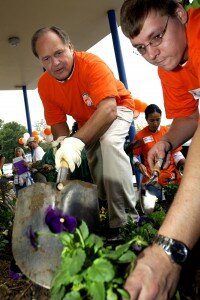
  • Gain confidence and a sense of achievement Volunteers are motivated in their work because they are able to work for a cause or passion that they truly believe in. When one is able to work for a cause close to their heart, they feel a sense of achievement at seeing the effect that their good work has on others. Volunteering around a personal interest or hobby can be fun, relaxing and energizing. That energy and sense of fulfillment can carry over to other aspects of your life and sometimes helps to relieve work tensions and foster new perspectives for old situations.2 guys volunteer planting
  • Better your health Those who participate in volunteer activities report higher levels of life satisfaction, sense of control over life, and feeling physical and emotionally healthier. A report featured in The International Journal of Person Centered Medicine found that people who give back to others lead more happy and healthy lives than those who do not volunteer. “People in general are happier and healthier, and may even live a little longer, when they’re contributing” to their community or an organization they are passionate about, said study author Stephen G. Post, PhD. A majority of study participants said their volunteer activities enrich their sense of purpose in life and lower stress levels. The survey also showed that those who give back are less likely to feel hopeless and lonely than people who do not volunteer.
  • Feel good by doing good! Volunteering is about giving your time, energy and skills freely. As a volunteer you have made a decision to help on your own accord, free from pressure to act from others.  Volunteers predominantly express a sense of achievement and motivation, and this is ultimately generated from your desire and enthusiasm to help. It may be true that no one person can solve all the world’s problems, but what you can do is make that little corner of the world where you live just that little bit better!
  • Establish yourself in your community We sometimes take for granted the community that we live in. It is easy to become disconnected with the issues that face your community as a whole. Why not bridge that expanding gap through volunteering? Volunteering is ultimately about helping others and having an impact on people’s wellbeing. What better way is there to connect with your community and give a little back? As a volunteer, you certainly return to society some of the benefits that society gives you.
  • Find new hobbies and interests Finding new interests and hobbies through volunteering can be fun, relaxing and energizing. Sometimes a volunteer experience can lead you to something you never even thought about or help you discover a hobby or interest you were unaware of. You can strengthen your personal and professional mission and vision by exploring opportunities and expanding your horizons. Perhaps you’ll discover a previously unknown passion for education or making blankets for homeless shelters!

What are the benefits you’ve experienced through volunteering? Have you succeeded in keeping your resolutions? Let us know in the comments below!

Related Articles

Share

How Service Can Be Added to Your Classroom Lesson Plan

Wednesday, November 30th, 2011

Service learning projects are an important addition to the enrichment of education. Service projects are important not only because they can be incorporated into the learning environment of the classroom, but also they can teach civic responsibility and strengthen communities. The most important thing that service learning can add to an educational atmosphere is an answer to the question “Why do I need to learn this” because it adds a real life application to daily lessons.

It is important that service to the community is taught at an early age, to ensure a lifetime of service and giving to others. Children who serve together tend to have higher levels of self-respect, character development, and academic achievement. Projects can be big or small depending on your classroom schedule and time availability. Projects should also be developed based upon your class’s age level.

So you want to start a classroom volunteer project? How on Earth do you begin a service project especially with young kids and very little time to stray away from lesson plans? Here are some project ideas for all types of ages and schedules:
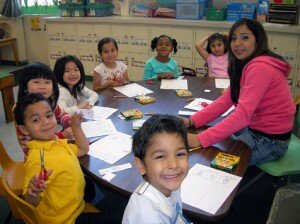
  • Preschool age: Teach your class about sharing through a cheer cards service project. Provide construction paper, crayons, pictures, etc. to your class. Ask students to think of an individual who has made them happy in the past year. The students will make a card for that person with a “cheery” message attached to spread happiness with loved ones.
  • Kindergarten age: Spread the message of kindness and friendship with your class by making pet collars for shelter animals. These collars can be made out of felt or cotton and decorated by your students. Once the collars are finished they can be donated to a local animal shelter. Teach children about animals while doing this project.
  • Elementary school age: teach respect to your classroom by making friendship quilts. Have students decorate a cloth square with messages or pictures of peace and friendship. Put all of the squares together as a quilt or string of messages. If your class has extra time, students may also make peace cards to accompany the quilt. Once the quilt is completed, it can be donated to your local shelter.
  • Middle school age: teach your class the power of giving by holding a class or school-wide food drive, canned goods drive, clothing drive, or coat drive. Have each classroom make a box to collect donations in. This box should be visible in the classroom so that others know about the drive. Let others know about your donation drive by having a write up in your school newsletters, a note to parents, or local organization announcement.

With the right amount of planning and development your class really can give back to the community at any age. Whether your project is big or small children really do learn the power of giving back by participating in service projects.

The holidays are the easiest time to give back this year, with a wide variety of projects to choose from. You classroom can join GenerationOn this year from November 29 to December 13 for their Holiday Gift Campaign. Get your classroom service project started by having your students pledge service to GenerationOn, every pledge of service will be honored by Hasbro who will donate a toy to a child in need.

Do you have more ideas to get a classroom involved in service? We would love for you to share with us!

Enhanced by Zemanta
Share

5 Ideas for Getting Involved in Your Community During the Holidays

Thursday, November 3rd, 2011

So you want to help your community this holiday season, but while brainstorming ideas for the project you find yourself stumped? The media confronts us daily with the many social problems that plague our nation, without a solution in sight. It is easy to feel helpless when this information is talked about because no solution is foreseen.

It’s a good idea to start looking for holiday volunteer opportunities now, so you can be sure to find something you’d like to do. Just like shopping for a turkey the night before Thanksgiving, you might not find what you’re looking for if you wait until the last minute to find somewhere to volunteer.

It is easy to become involved in making a difference for your community by following these simple project tips. And remember, you can always get in touch with one of our HandsOn Network volunteer centers to find volunteer opportunities!

  • Hunger or Housing. From big to small projects there are tons of ways that you can help tackle this issue in your community! Help cook and serve meals at a soup kitchen, gather clothing and donate it to your local shelter, make toiletry kits for the homeless, make care packages full of winter clothing for your local children’s shelter, help repair a local homeless shelter, or partner with Habitat for Humanity and help with a build.

  • Elderly. Helping the older population in your community can be both fun and rewarding from any level. You can spend time with a senior citizen in your community, deliver meals to a homebound individual, perform home repairs or yard work for senior citizens in need, hold a social event for your local nursing home, adopt a “grandfriend” at your local nursing home and make regular visits.
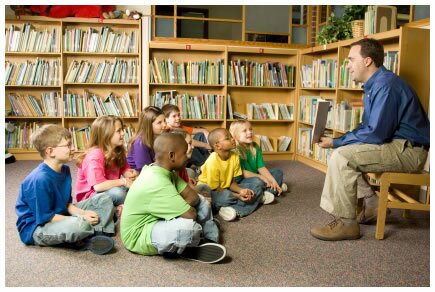
  • volunteer tutorEducation. Education has become a big topic in the media over the years; there are many ways that you can help improve your community’s education system through volunteering. Ideas include raising money for Braille or large print books for the visually impaired, plan a school supply drive to assemble “back to school” kits for your local schools, set up a buddy system for kids needing friends, bring toys to hospitalized children, read books or the newspaper to visually impaired individuals, raise money to purchase and install playground equipment.

  • Health. Participate in a local AIDS or breast cancer walk, volunteer at a Special Olympics event, hold a blood drive, help a local agency create health promotion kits, host a health screening at a local store, library, or school.
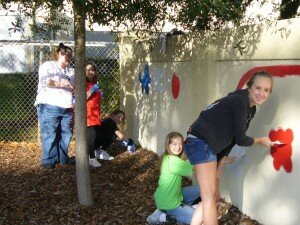
  • Environment. You can help tackle your community’s environmental issues at many different levels. Set up a recycling center at your local school or retirement community, clean up a vacant lot or river bank, raise funds to adopt an acre of the rainforest or other habitat, clean up trash in your local park, partner with volunteers to paint a mural at a local school or park.

These are just a few tips that can be incorporated into your holiday resolutions that will make a big difference in your local community. From big to small you can help improve your community this holiday season.

Have a great holiday season! We’d love to hear about how you’re helping your community this year in the comment section below


Share

The Role of Mentors in Schools

Wednesday, July 27th, 2011

In yesterday’s post, we looked at some common questions about volunteering in schools. One of the questions was, “Is mentoring right for me?” Today, we look at the positive role mentors can play in a student’s life.

Mentoring is an extraordinary commitment that can yield extraordinary results. Working with a single student or a small group, a mentor acts as a guide to the larger world outside of school and home, serves as a role model, helps students make positive life choices, listens to concerns, supports interests, and opens children’s eyes to new possibilities. Mentors dedicate time to helping students academically, socially, mentally, and physically, as necessary. Their roles include:

  • A long-term commitment to the program.
  • Helping students develop personal interests outside of school.
  • Helping students become involved in all aspects of school.
  • Being sincere, committed, and punctual for scheduled meetings.
  • Developing a level of trust with the student. A trusting relationship is the foundation for successful work.
  • Being a positive role model.
  • Listening effectively. Sometimes, the mentor is the only person that the student has identified as one who will listen to his/her concerns and problems.
  • Helping the mentee set short and long-term goals.

Help students to help themselves

There is a big difference between offering solutions and helping a student discover his/her own options. Helping students develop problem-solving and decision-making skills will put them on the road toward independence, and the realization that they can direct the course of their lives.

Help students with their problems

A mentor is there to assist with problems such as issues with: self-confidence, interpersonal conflicts, school attendance, or goal setting.

This doesn’t mean that the volunteer plays the role of counselor, social worker, or parent. Volunteers are there to offer support, encouragement, and to give positive reinforcement. By listening and asking open-ended questions, a mentor can gently guide the student toward finding his/her own solution. As with all volunteers, a mentor must consult a teacher, administrator, or school counselor if it seems that a student needs additional help.

Help students build self-confidence

Students may feel enormous pressure from home, school, or peer relations, and lack the self knowledge and confidence necessary to navigate challenging situations. By showing care for and belief in a student, a mentor can encourage a student to raise his/her expectations and make positive decisions.

Statements such as these can help build self-esteem:

  • I like how you handled that!
  • I see that you are making a real effort or trying very hard.
  • I know you can do this!
  • What are your thoughts or ideas about this?

Help students develop interpersonal skills

Even students who communicate well with peers may not know how to interact appropriately with adults. Mentors should model appropriate communication and behavioral skills. A volunteer can teach little things such as looking someone in the eyes when speaking to them, speaking clearly, practicing good manners, and addressing adults politely. Remember, students will learn by watching and interacting positively with role models.


Are you a mentor? Let us know about your experience in the comments!

Share

The National Service Learning Conference Comes to Atlanta

Tuesday, April 5th, 2011

This week, over 2500 educators, youth, and community organizations from fifty states and thirty-four countries will be coming together  in Atlanta—and we are honored to be one of the co-hosts of the National Service-Learning Conference.

Setting the stage for a lifetime of service is vitally important to the health of our communities and  our nation. Positive, impactful, and fun service projects that can make our nation’s youth feel like they can be part of the solution to some of the biggest problems that we face are an important part of solving those problems.

Through generationOn, more than a million young people in all fifty states and countries around the globe are having a positive impact on their communities. generationOn is taking a comprehensive approach to improving schools and the lives of children by leveraging the transformative power of service and service-learning.

The Conference is occurring at a critical time as our nation actively seeks an array of solutions that will help us to achieve a graduation nation and at the same time develop a new sense of civic responsibility for this generation. The Conference presents an opportunity and a needed platform for us to bring some of the top thought leaders and innovators together to explore how we can grow service-learning as a strategy that connects learning objectives to community needs, while empowering youth to discover their potential as world citizens.

Getting youth involved in service early and in a positive way is the best way to get them to lead a lifetime of service. Teachers and parents can work together to help to ensure that today’s youth will be tomorrow’s service advocates and change makers.

In The Wisdom of the Sands, Antione Saint-Exupéry advised, “If you want to build a ship, don’t drum up the men to gather wood, divide the work and give orders. Instead, teach them to yearn for the vast and endless sea.” So, too must we teach our youth that service is not a chore but a pleasure, that acting to change their communities for the better is not work but an adventure.

Share

Change Points: Remaking American Education

Thursday, June 17th, 2010

The countdown to our National Conference on Volunteering and Service has begun, and I want to highlight some of its amazing sessions and presenters every few days.

One of the most anticipated micro-plenaries is about how service can transform our schools.  On Wednesday morning, June 30, Secretary of Education Arne Duncan will examine The Role of Service in Remaking American Education.

Joining him will be Joel Klein, Chancellor of the New York City Department of Education; Ronjanett Taylor, Director of America Reads – Mississippi; Bob Moritz, Chairman and Senior Partner, PricewaterhouseCoopers LLP, which is sponsoring this micro-plenary, and Anthony Salcito, VP of Worldwide Education for Microsoft.

Providing high-quality education is critical to America’s economic future, and more than 15 years of research have shown that students involved in service are more likely to be successful in school. We also know that community engagement in schools can make a critical difference in school success.

We’re looking forward to a robust discussion about the latest developments in education policy and the role of service in driving education reform. Free registration for this one special session is available to non-Conference attendees by clicking here.

Sincerely,

Michelle Nunn
CEO, Points of Light Institute

Share

8 Great Lessons for Teaching Kids about Philanthropy

Friday, June 11th, 2010

One way to empower young people to make a difference in their school, their community and their world is to teach them about giving.

Learning to Give offers lesson plans, activities and resources to educate youth about the power of philanthropy — sharing time, talent, and treasure.

You can use these ideas yourself, or talk to your child’s teacher about incorporating them into next fall’s lesson plan.

1. Traditions
Grades 3-5
Students will learn the vocabulary of philanthropy, use literature to discover acts of philanthropy in the making of quilts, and participate in their own quilting bee.

2. Earth Connections
Grade 3-5
Students will expand their awareness of the earth through the study of some traditional Native American beliefs about the concept of “Mother Earth.”

3. Global Garbage
Grades 6-8
This unit is designed to promote an understanding of the adverse effects of the careless actions of people.

4. Environmental Groups and the Three Economic Sectors
Grades 9-12
Students will learn about the three economic sectors: profit, nonprofit, and government.

5. Watch Me Grow!
Grades K-2
The purpose is for students to see the interconnectedness of nature and its importance in their lives

6. Building a Mini-Park and Bird Sanctuary
Grades 3-5
Students will take an active role and gain pride in adding beauty to their surroundings.

7. The Four R’s: Reduce, Reuse, Recycle, RESPECT!
Grades K-2
Through four quick and easy lessons, this unit emphasizes the importance of reducing, reusing and recycling with a particular focus on the significance of respecting our environment.

8. Pitch In! – A Philanthropic Puppet Project
Grades 3-5
Students will study philanthropists and environmentalists through literature and research environmental issues.

Learning to Give units and lessons tie together service and learning, core academics, and real world learning.

These eight ideas are a small sample of more than 1,200 Learning to Give lessons correlated to state academic standards, that link learning and service.

Reblog this post [with Zemanta]
Share

Our Voice, Our Country

Thursday, June 3rd, 2010

By Jon Mann

If you are reading this blog, you are probably volunteering and working for a cause that addresses an urgent problem America faces today.

I’ve got a question for you…

If there were a way to bring Americans together everywhere, to present and choose a plan the majority believed would help solve a problem, would you want to know about it?

Here you go!

Our Voice Our Country is a new education-based, national website that engages the public in determining priority issues and achievable solutions.

The site combines relevant history, ethical decision making and free-flowing discussion which leaves you feeling as if your time has been well spent.

This website puts the ability to help solve America’s most urgent problems at your fingertips and I really think you would enjoy discovering it. And there’s a great way to do just that!

At the upcoming National Conference on Volunteering and Service,   Jon Mann (that’s me, I’m the founder/director) and Brian Nickerson Ph D (An Iona College Dean) will present a very interactive and useful workshop that introduces the site and engages attendees in hands-on use of its tools.

We’re scheduled to present on June 29th at 4:30 p.m.

Our workshop is called “Our Voice Our Country.org — Where Every Cause Can Make Their Case To The Nation,” and we’d love to meet you there!

If you can, please remember to bring a web-ready mobile phone or laptop. Its not required, but we’ll be doing some online inputting during the session, so having one would really help!

We’ve designed a workshop in which you can help clarify:

  • what the majority believe to be America’s three most urgent national problems; and
  • at least one expert in a relevant field with an achievable solution for each national problem.

You”ll also get a solid understanding of what Our Voice Our Country is, and how any cause or individual can tap into the power of this unfiltered, non-partisan system for positive change!

Ok, now that you know what this is about, I’d love it if you’d register today, while seats are still available!

Hope to see you then — or sooner!

Our Voice Our Country has had over 170,000 visitors since going online last year, and is now conducting its third National Scholarship Competition. This Competition is for college-bound high school seniors. By participating, these new voters are clarifying their priority issues, considering solutions and finding where others stand — all of which prepare students to make wise decisions when voting.

Reblog this post [with Zemanta]
Share